
Google AI Overviews: How to Get Your Content Featured
Learn how to optimize your content for Google AI Overviews and AI Mode. Strategies to get cited in AI-generated search results.

Rodrigo Diniz
AEO Strategy Lead & GEO Specialist
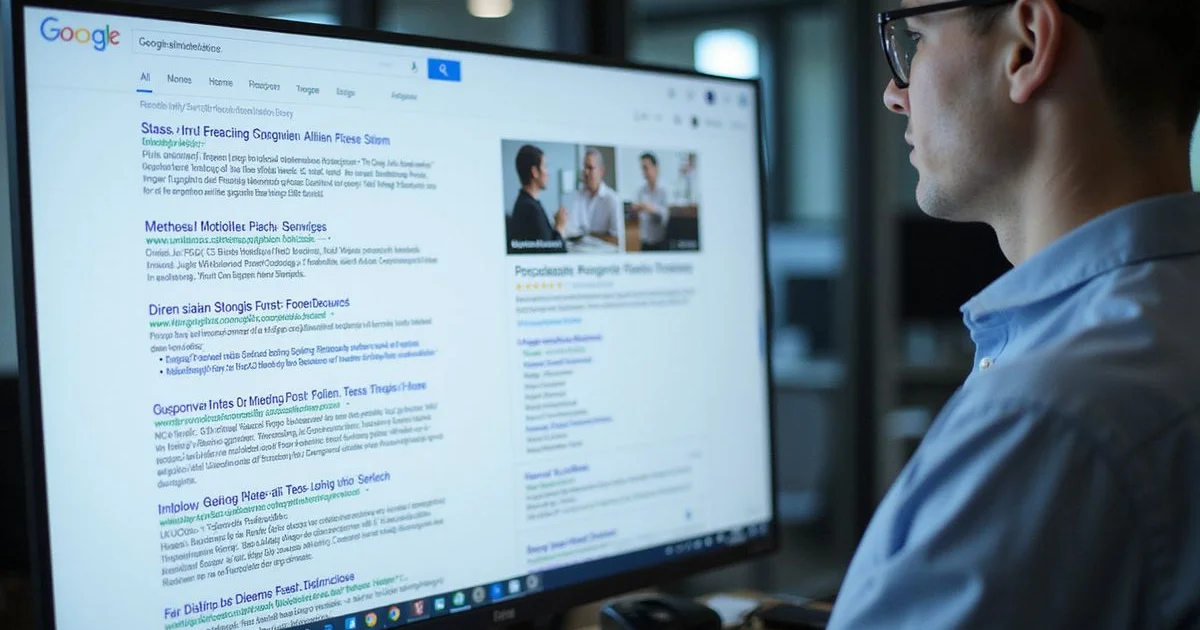
We have watched the search results page change dramatically right here in Honolulu.
It used to be that securing the number one organic spot was the ultimate goal for any business.
Now, a massive AI-generated answer often pushes that top result down the page.
You have likely seen this shift yourself when searching for local services or quick answers.
This new feature synthesizes information from across the web into a single, comprehensive snapshot.
It creates a unique challenge for local businesses trying to capture attention.
Some users get their answer immediately and never click through to a website.
But this shift also opens a massive door for brands that know how to adapt.
Being cited in this prime real estate offers visibility that traditional rankings simply cannot match.
At Nekko Digital, we have been testing and refining our approach to these AI Overviews since they first appeared.
Our team has identified specific patterns that get local content featured in these high-value summaries.
How Google AI Overviews Work
Google AI Overviews (formerly known as SGE) utilize the Gemini model to process complex queries.
The system does not just match keywords.
It actually reads and understands the intent behind your search.
Here is the specific process that happens in milliseconds:
- Query Interpretation: The AI identifies if the user wants a quick fact or a complex explanation.
- Information Retrieval: It pulls data from the most authoritative sources in the index.
- Real-Time Synthesis: The model drafts a unique answer based on those sources.
- Citation Linking: It adds clickable cards or arrows to the websites it used for information.
We have found that not every search triggers this experience.
Simple navigational searches, like looking for a specific website, usually skip the AI layer.
Informational queries are the primary trigger.
Questions like “best time to visit North Shore” or “how to fix a leaking pipe” almost always generate an overview.
What Gets Cited in AI Overviews
The algorithm is picky about what it uses as a source.
We have analyzed countless search results to see which local businesses make the cut.
Several distinct factors consistently appear in the winning pages.
Authority and Local Relevance
Generic content rarely performs well here.
Google prioritizes sources that demonstrate clear authority on the subject matter.
For a Hawaii business, this means showing local expertise is non-negotiable.
Mentions of specific neighborhoods, local laws, or regional nuances signal to the AI that you are a credible source.
Structure and Directness
The AI model prefers content that is easy to digest.
Paragraphs that ramble or bury the lead often get ignored.
We see the best results from content that provides the answer immediately.
Data Verification
The system favors pages that cite statistics or concrete numbers.
Vague claims are often filtered out in favor of hard data.
If you state a fact, back it up with a number or a credible reference.
Strategies for Getting Featured in AI Overviews
We use these specific tactics at Nekko Digital to help our clients appear in these summaries.
1. Answer Questions Directly (The BLUF Method)
You must structure your content using the “Bottom Line Up Front” approach.
Start your section with a direct, concise answer to the user’s question.
We recommend keeping this initial answer under 30 words.
For example, if you are targeting “cost of wedding catering in Oahu,” do not start with a story about weddings.
Start with: “Wedding catering in Oahu typically costs between $80 and $150 per guest, depending on the menu style and service level.”
You can expand on the details after that core sentence.
This format allows the AI to easily grab that snippet and present it as the definitive answer.
2. Create Experience-Based Content
Google’s guidelines specifically highlight the value of “Experience” in their E-E-A-T framework.
The AI looks for evidence that you have actually done what you are writing about.
We encourage our clients to use first-person language and share specific anecdotes.
Generic Advice vs. Experienced Insight:
| Feature | Generic Content (Avoid) | Experienced Content (Target) |
|---|---|---|
| Perspective | ”It is recommended to use local materials." | "We use locally sourced Koa wood because it withstands our humidity better.” |
| Evidence | ”Prices vary by season." | "Our November bookings cost 20% less than July due to the rainy season.” |
| Tone | Distant and academic. | Personal, direct, and helpful. |
3. Optimize Content Structure for Machine Reading
You need to make your page easy for a machine to parse.
This involves clear formatting that acts as a roadmap for the algorithm.
Our team applies these structural rules to every piece of content:
- Descriptive Headings: Use H2s and H3s that are actual questions users ask.
- Logical Hierarchy: Nest related topics clearly under broader categories.
- Bulleted Lists: Break down steps or features into clean lists.
- Definition Blocks: Clearly define industry terms immediately after using them.
4. Implement Comprehensive Schema Markup
Schema markup is code that helps search engines understand the context of your data.
It is particularly vital for local businesses in Hawaii wanting to stand out.
We focus on these specific schema types for AI optimization:
- LocalBusiness Schema: To confirm your physical location and service area.
- FAQ Schema: To explicitly tell Google which questions you are answering.
- HowTo Schema: For step-by-step guides or DIY articles.
- Article Schema: To establish the author’s credentials.

5. Build Topical Authority Through Content Clusters
A single good article is rarely enough to establish authority.
You need to demonstrate that you are the go-to resource for an entire topic.
We utilize a “hub and spoke” model to build this web of relevance.
If you provide local SEO services, do not just write one sales page.
Create a cluster of related content that covers every angle:
- The Hub: A main guide on “Hawaii Local SEO.”
- Spoke 1: How to optimize Google Maps for Honolulu.
- Spoke 2: The best local directories for Oahu businesses.
- Spoke 3: Managing reviews from tourists vs. locals.
This interconnected structure signals to the AI that your site covers the topic comprehensively.
6. Maintain Content Freshness
Information becomes outdated quickly in the algorithm’s eyes.
The AI prioritizes the most current data available.
We advise a quarterly review of your top-performing pages.
Update any pricing, dates, or statistics to the current year.
Even a small refresh tells Google that the content is still relevant and accurate.
The Relationship Between AI Overviews and Traditional Rankings
There is a distinct overlap between ranking high organically and appearing in the AI Overview.
Data from platforms like Authoritas suggests that a significant percentage of AI citations come from the top 10 organic results.
But position one is no longer the only way to win.
We often see pages ranking in positions 5 through 9 getting cited because they offer a better direct answer.
This creates a huge opportunity for smaller sites to leapfrog larger competitors.
Your traditional SEO foundation remains the price of entry.
Technical health and backlinks still matter.
You can read more about balancing these approaches in our guide on SEO vs. GEO.
Measuring Your AI Overview Performance
Tracking success here requires a mix of tools and manual observation.
Standard analytics often lump this traffic in with general organic search.
Our team uses a specific protocol to monitor AI visibility:
- Search Console Analysis: We look for queries with high impressions but lower-than-expected click-through rates.
- Manual Spot Checks: We physically search your priority keywords to see if an overview triggers.
- Rank Tracking Software: Tools like SE Ranking have begun integrating AI Overview detection features.
- Traffic Pattern Review: We watch for traffic spikes on pages that answer specific informational questions.
What Comes Next: Google AI Mode
Google is moving toward an even more immersive “AI Mode.”
This will likely turn the search engine into more of an answer engine.
Users will have conversations with the search bar rather than just typing keywords.
We are preparing our clients for this by doubling down on conversational content.
The goal is to be the voice that the AI trusts enough to repeat.
The core principles of quality and utility will remain constant.

Optimize Your Content for AI Overviews
Adapting to this change is necessary for survival in the modern search environment.
You need a strategy that targets both the traditional results and the new AI layer.
This is the core of generative engine optimization.
We help businesses across Hawaii build content ecosystems that secure this visibility.
Contact us for a free consultation to discuss how your business currently shows up in these results.
Related reading:
Ready to Improve Your Search Visibility?
Get a free SEO audit and discover how Nekko Digital can help your business rank higher.
Get Free SEO Audit